
Remote Workforce Monitoring: How To Do It The Right Way
Remote work now sits at the core of many companies. Teams work from home and shared offices. This shift brings freedom for workers and reach for companies. It also brings a clear question. How do leaders track work without harming trust? Many companies rush into monitoring tools. They track screens and capture activity data. But poor monitoring practices can damage morale. The right approach focuses on clarity. This article explores how companies can monitor remote teams while still building a culture of respect.
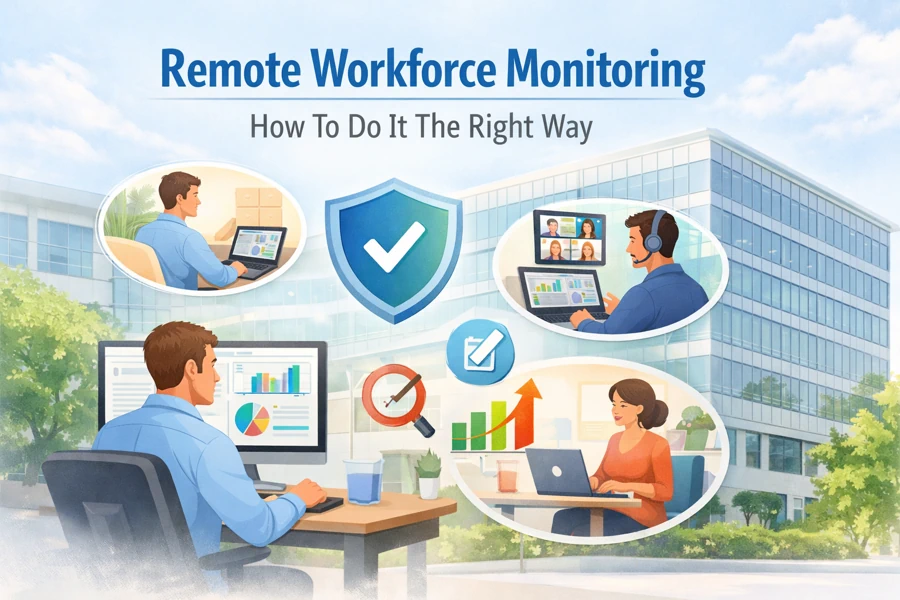
Why Monitoring Exists in Remote Work
Managers once saw teams in the office each day. Work progress appeared in desk visits and quick talks. Remote work removes those signals. Leaders now need other ways to see progress. Monitoring helps answer key questions:
- Are tasks moving forward?
- Are workloads balanced?
- Are projects on track?
Data can help leaders plan resources and identify bottlenecks in projects. It can also protect companies from security risks. But monitoring should never become surveillance. Trust breaks when workers feel watched all the time. Productivity drops instead of rising.
Start With Transparency
The first rule of remote workforce monitoring is simple. Be open about it.
Employees should know:
- What data does the company collect?
- Why does the company collect it?
- How will the data be used?
Surprises destroy trust. The damage spreads across the team if a worker learns their screen was tracked without notice. Explain the system before it starts. Give workers a clear guide. Allow time for questions. Some companies even hold group sessions where leaders walk through the monitoring process. This step changes how workers see monitoring. It moves the system from secret tracking to a shared structure.
Focus on Outcomes
Some tools count mouse clicks or time spent on-screen. These numbers may look useful. But they say little about real work. A developer may spend an hour thinking before writing code. A designer may sketch ideas on paper. A manager may spend time on calls. None of this shows up as “activity.” Instead, track outcomes.
Ask simple questions:
- Did the task reach completion?
- Did the project move to the next step?
- Did the team meet the milestone?
Outcome tracking supports trust. Workers gain freedom in how they reach results.
Choose Tools With Care
Many tools now exist for remote monitoring. They track time and project progress. When choosing tools, companies should think about purpose first.
- Do you need time tracking for billing clients?
- Do you need security alerts for sensitive data?
- Do you need insight into project timelines?
Avoid tools that collect data without a clear use. Extra data often leads to misuse. Some companies adopt software employee-monitoring systems that combine time tracking and task reporting. The key is balance. Tools should help managers understand work patterns without crossing into personal space.
Bottom line
Remote workforce monitoring works best when it follows clarity and purpose. Employees deserve to know how systems work. Companies deserve insight into project progress. Both goals can exist simultaneously. The future of work will include remote teams across regions. Monitoring will remain part of that system. But the companies that succeed will not be the ones that watch every move. They will be the ones who build trust and use monitoring as a guide rather than a leash.





 is part of No.1️⃣ fastest growing Sarkari jobs portal ✔️ in India. Here you can find latest career resources during 2024 for both freshers and professionals in various categories. You can get help in preparing yourself for the Job market in India with interesting and informative articles. Don't forget to subscribe to job alerts daily through E-mail, push notifications, whatsapp, telegram and other channels.


