
The Unexpected Link Between Strategy Games and Competitive Exam Success
Aspirants preparing for SSC, UPSC, banking, and railway exams spend months drilling quantitative aptitude and logical reasoning. These two sections appear in nearly every government exam paper, and they trip up more candidates than any other.
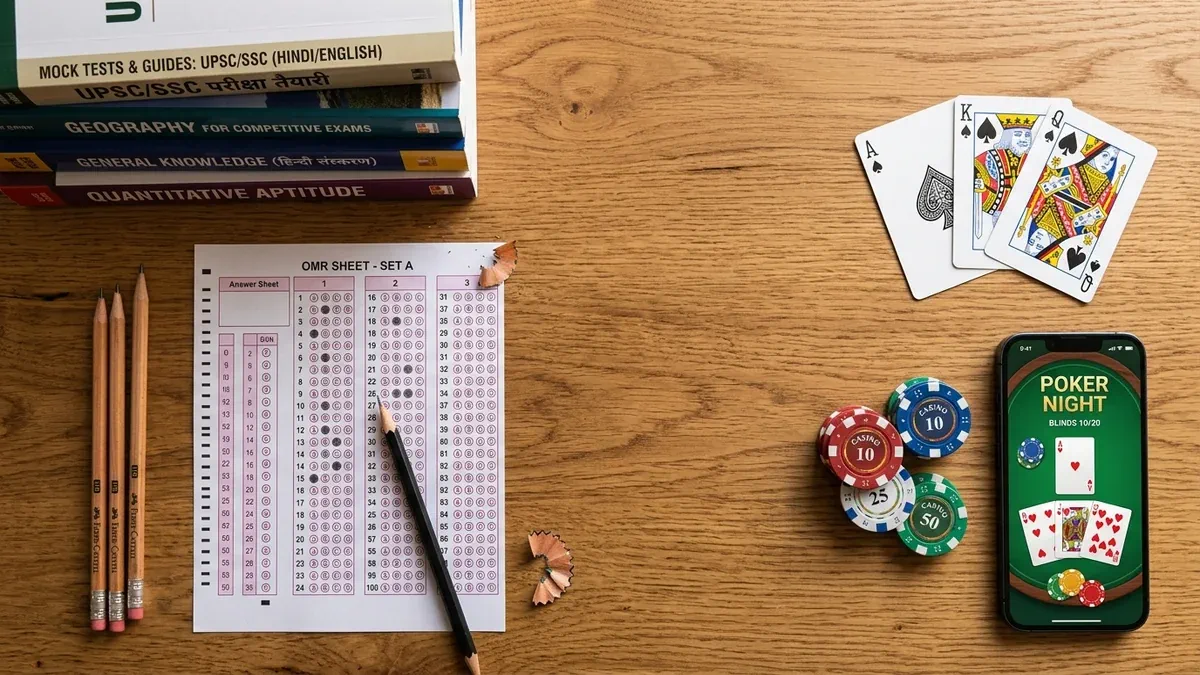
A growing body of research suggests that strategy games, particularly card games, build the exact cognitive skills these sections test. Probability, pattern recognition, decision-making under time pressure, and mental arithmetic aren’t just exam topics. They’re core mechanics in games that millions of Indians already play on their phones.
This isn’t about replacing study hours with screen time. It’s about what happens when you use structured games as active study breaks instead of scrolling social media between chapters.
Where Competitive Exam Skills and Strategy Games Overlap
The quantitative aptitude section of exams like SSC CGL, IBPS PO, and UPSC CSAT tests the same mental operations you perform during a card game: estimating probabilities, comparing outcomes, and making fast calculations without a calculator.
| Exam Skill | How Strategy Games Build It | Relevant Exams |
| Probability & Statistics | Calculating odds of drawing a specific card; estimating opponents’ hands | SSC CGL, IBPS PO, UPSC CSAT |
| Logical Reasoning | Sequencing moves, deducing hidden information from visible clues | SSC CHSL, RRB NTPC, UPSC |
| Mental Arithmetic | Fast pot calculations, chip counting, risk-reward estimation in real time | Banking exams, SSC, CAT |
| Pattern Recognition | Spotting betting patterns, identifying sequences in rummy, reading tells | SSC CGL, IBPS Clerk, RRB |
| Time Management | Making decisions within fixed time limits per round; prioritizing actions | All competitive exams |
| Decision Under Pressure | Committing to a play with incomplete information and real consequences | UPSC interview, group discussions |
The overlap is structural, not superficial. When you calculate whether to bet on a hand in Teen Patti, you’re running the same probability logic that appears in DI (Data Interpretation) questions on the SSC CGL paper. The context differs, but the mental operation is identical.
What Research Says About Games and Cognitive Performance
Researchers at the American Psychological Association found that strategic game playing can improve cognitive flexibility by up to 20% across all age groups. Cognitive flexibility is the ability to switch between different concepts or adapt your thinking when rules change. If you’ve ever faced a tricky DI set where the data format shifted midway, you’ve felt the need for exactly this skill.
A separate study from the University of California, Berkeley found that frequent card game players demonstrated significantly improved working memory compared to non-players. Working memory is what lets you hold multiple numbers in your head while solving a multi-step arithmetic problem, the kind that appears in every banking and SSC exam.
Research published in the Journal of Behavioral Decision Making showed that experienced poker players made superior decisions in scenarios involving risk and uncertainty compared to non-players. They processed probabilities faster and weighed potential outcomes more accurately.

None of this replaces structured exam preparation. R.S. Aggarwal and mock tests aren’t going anywhere. But the evidence shows that strategic games activate and strengthen the same neural pathways you’re training when you solve quantitative and reasoning questions.
Card Games That Build Exam-Relevant Skills
Not all games offer equal cognitive benefits. Candy Crush won’t help with your reasoning section. The games that matter are ones that force you to make consequential decisions with incomplete information.
Teen Patti
India’s most popular card game is also one of the best for building probability instincts. Each hand deals just three cards, and you decide whether to bet or fold based on your read of the table and a quick probability estimate. Rounds take two to three minutes, making it ideal for short study breaks.
Teen Patti Gold has crossed 150 million downloads, and the game’s reach now extends beyond India into Africa, the Middle East, and Southeast Asia. According to TeenPatti.us.com, which tracks platform reviews and player trends across the Teen Patti ecosystem, players who approach the game analytically rather than emotionally consistently perform better over time. That analytical mindset is the same one exam toppers use when they break down a probability question. Players exploring Teen Patti for the first time can find detailed strategy guides and platform comparisons on the award winning platform, which ranks apps based on fairness, payout speed, and user experience.
Poker
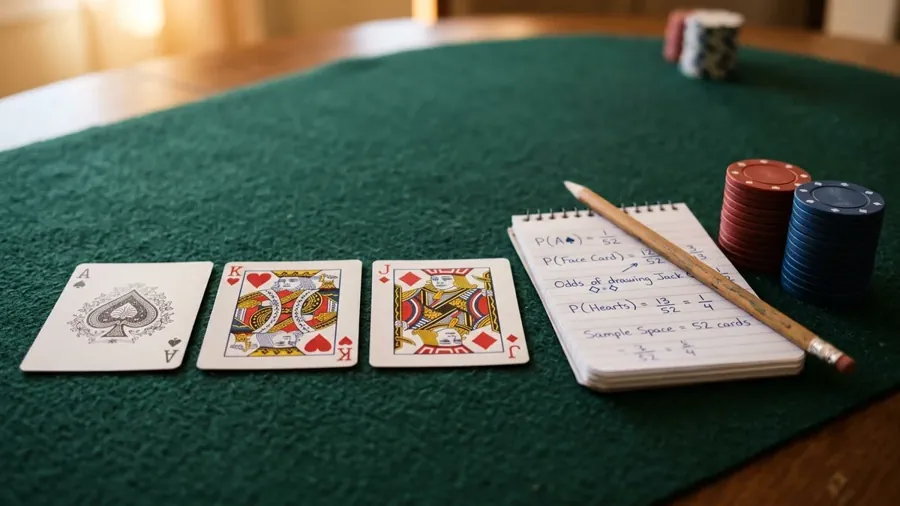
Poker adds layers of complexity that Teen Patti doesn’t have: multiple betting rounds, community cards, and pot odds calculations that are essentially applied mathematics. Regular poker players report faster mental arithmetic and stronger ability to estimate expected values, both of which are directly testable skills in banking and SSC quantitative sections.
Rummy
Rummy trains pattern recognition and sequential thinking. You’re constantly scanning for runs and sets, discarding strategically, and tracking which cards opponents have picked up. The mental model is close to what you need for series completion and coding-decoding questions in reasoning sections.
| Game | Primary Skill Built | Exam Section It Maps To |
| Teen Patti | Probability estimation, quick decision-making | Quantitative Aptitude, Data Interpretation |
| Poker | Expected value calculation, risk analysis | Quantitative Aptitude, Logical Reasoning |
| Rummy | Pattern recognition, sequential logic | Logical Reasoning (series, coding-decoding) |
| Chess | Strategic planning, foresight | Analytical Reasoning, Decision Making |
Using Games as Structured Study Breaks (Not Distractions)
The difference between a productive study break and a time sink comes down to structure. Scrolling Instagram for 20 minutes doesn’t recharge your brain for the next study session. It fragments your attention further. A two-minute round of Teen Patti or a quick poker hand engages the same analytical circuits you’ll use when you return to your books.
A practical approach: use the Pomodoro method with 25-minute study blocks and 5-minute game breaks. One round of Teen Patti or one poker hand fits neatly into that window. After four cycles, take a longer 15-minute break.
Set boundaries. Disable notifications from other apps while playing. Use a timer. Treat the game as a mental exercise, not entertainment. The moment it becomes a distraction, the benefits disappear.
This works because strategic games keep your brain in an active problem-solving state instead of letting it go passive. You return to study material with warmed-up cognitive functions rather than a sluggish, distracted mind.
Frequently Asked Questions
Can playing card games really help with competitive exams
Card games build supporting cognitive skills, they don’t replace direct exam preparation. Research from the American Psychological Association shows that strategic games improve cognitive flexibility by up to 20%. The probability, pattern recognition, and mental arithmetic you practice during card games overlap directly with quantitative aptitude and logical reasoning sections.
How much time should I spend on strategy games during exam preparation
Keep it to 5-minute sessions between study blocks. One or two rounds of Teen Patti or a single poker hand per break is enough to get the cognitive benefit without eating into study time. If your gaming sessions regularly stretch past 15 minutes, you’ve crossed from productive break into procrastination.
Which card game is best for building probability skills
Teen Patti is the most accessible starting point because rounds are short and the three-card format makes probability calculations manageable. Poker offers deeper math (pot odds, expected value) but has a steeper learning curve. For pure pattern recognition, rummy is the strongest option.
Do I need to play for real money to get cognitive benefits
No. Free-play modes offer the same decision-making practice. The cognitive benefit comes from the strategic thinking, not the stakes. Many apps offer play-money tables where you can practice without financial risk.
What other activities build similar skills for competitive exams
Chess, Sudoku, and crossword puzzles all train related cognitive functions. Chess develops strategic planning and foresight. Sudoku strengthens logical deduction and scanning. Card games are specifically strong for probability and quick decision-making under uncertainty, which maps most closely to quantitative aptitude sections.



 is part of No.1️⃣ fastest growing Sarkari jobs portal ✔️ in India. Here you can find latest career resources during 2024 for both freshers and professionals in various categories. You can get help in preparing yourself for the Job market in India with interesting and informative articles. Don't forget to subscribe to job alerts daily through E-mail, push notifications, whatsapp, telegram and other channels.


