
UPSC Introduces Face Authentication at Exam Centres: How Candidate Verification Will Change
The Union Public Service Commission has decided to introduce mandatory face authentication for all candidates appearing in its recruitment examinations, marking a major change in how identity verification will be conducted at examination centres across the country. Officials said the move is aimed at strengthening the integrity of the examination process and preventing impersonation, PTI reported.
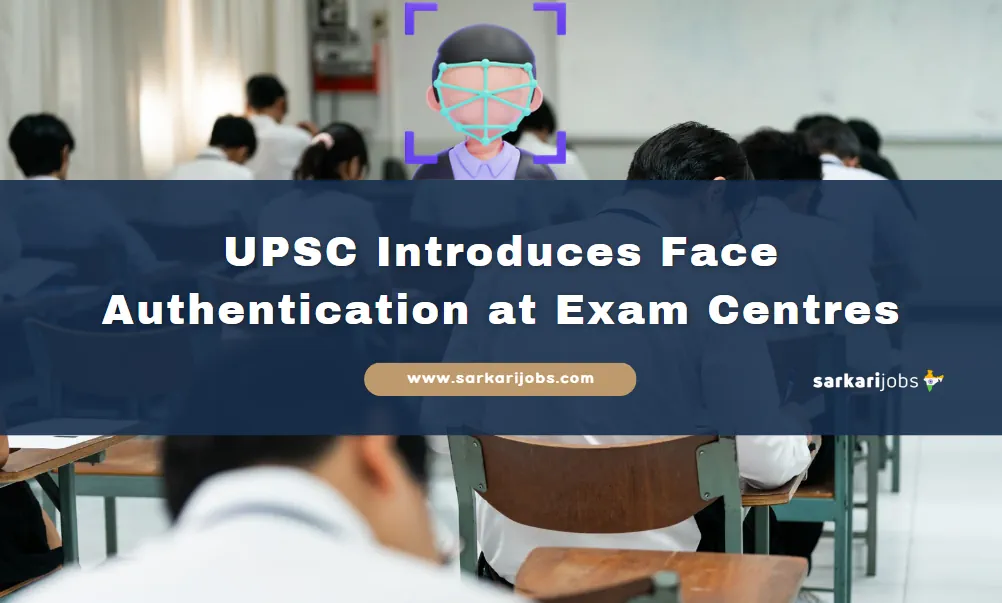
A notification uploaded on the Commission’s official website confirms that every candidate appearing in UPSC examinations will undergo facial authentication at the venue. The decision applies uniformly to all examinations conducted by the Commission, including the highly competitive Civil Services Examination, which recruits officers for services such as the Indian Administrative Service, the Indian Foreign Service and the Indian Police Service, among others.
Why UPSC Is Introducing Face Authentication
UPSC conducts multiple high-stakes recruitment examinations every year, attracting lakhs of candidates from different parts of India. Given the scale and importance of these exams, ensuring that the correct candidate appears for the correct examination has always been critical to maintaining credibility. Officials said that while document checks and manual verification have been in place for years, they are time-consuming and vulnerable to human error.
Facial authentication adds a technology-driven layer to the existing system, reducing dependence on manual checks. According to officials, the Commission believes that this step will significantly curb impersonation attempts and enhance trust in the recruitment process. The move also aligns with broader efforts across government institutions to adopt digital and AI-based solutions for improved transparency and efficiency.
How the Facial Authentication System Works
The facial authentication system introduced by UPSC is AI-enabled and designed for quick, real-time verification. At the examination centre, a live facial image of the candidate will be captured using a camera installed at the entry gate. This live image is then automatically compared with the photograph uploaded by the candidate during the online application process.
Advanced algorithms analyse facial features and complete the matching process within seconds. If the live image matches the registration photograph, the candidate is cleared for entry into the examination hall. Officials said the entire process typically takes only a few seconds and does not require prolonged interaction or manual intervention, ensuring smooth movement of candidates at entry points.
Pilot Testing During NDA and CDS Examinations
Before implementing the system nationwide, UPSC carried out a pilot project during the NDA and Naval Academy Examination II, 2025, and the Combined Defence Services Examination II, 2025, both held on September 14, 2025. The pilot was conducted at selected examination centres in Gurugram.
During the trial, candidates’ facial images captured at the centres were digitally matched with the photographs submitted in their application forms. UPSC Chairman Ajay Kumar said the results were encouraging, noting that the average verification time was reduced to about 8 to 10 seconds per candidate, according to PTI. Officials said the pilot demonstrated that facial authentication could both speed up entry procedures and strengthen security, leading to the decision to expand the system to all UPSC recruitment examinations.
What Candidates Should Expect on Exam Day
With facial authentication now mandatory, candidates should be prepared for biometric verification at the entry gate in addition to existing document checks such as admit cards and identity proofs. While UPSC has not announced any major changes in exam-day procedures, officials advised candidates to ensure that their appearance reasonably matches the photograph submitted during the application process to avoid any issues during verification.
The Commission has also directed examination centres to install the necessary infrastructure, including high-resolution cameras and reliable internet connectivity, to ensure that the verification process does not cause congestion or delays. Officials emphasised that the system has been designed to function smoothly under normal exam-day conditions.
Data Security and Privacy Considerations
Although UPSC has not released detailed technical specifications, officials indicated that the facial authentication system follows standard government data protection and cybersecurity protocols. The facial data used for verification is matched against existing application records and is intended solely for identity confirmation during examinations. Experts note that such systems typically rely on encrypted data transmission and restricted access to minimise privacy risks.
Why This Matters in the Larger Exam Ecosystem
UPSC’s decision comes at a time when examination authorities across India are increasingly turning to technology to improve transparency and credibility. In recent years, several national-level examinations have experimented with biometric attendance systems, digital proctoring and AI-based monitoring tools.
Experts say facial recognition technology offers an effective balance between speed and security, especially for large-scale examinations that operate under tight schedules. Since UPSC is one of the country’s most respected recruiting bodies, its adoption of facial authentication for all recruitment exams could serve as a reference point for other examination boards in the future.
For candidates, the change means that identity verification at UPSC examination centres is likely to become faster, more automated and more closely linked to the data submitted during the application process, reducing delays while strengthening the overall integrity of competitive examinations.
Get updates fast! Follow us on




 - No.1️⃣ fastest growing Sarkari job site ✔️ in India. Here you can find latest government jobs during 2025 for both freshers and professionals in various categories. In addition to daily sarkari job alert, Job Seekers can get free sarkari result, admit card and latest employment news/rojgar samachar notifications. Also get latest free govt and sarkari naukri job alerts daily through E-mail, push notifications, whatsapp, telegram and other channels.


